Soft spots in floor, wall, or ceiling
Springiness underfoot or a wall panel that flexes means moisture has already reached the structure. This is urgent.

Water intrusion
Water is the most expensive thing that can get into an RV, and it almost never enters where the stain appears.
Every RV is a collection of panels, seams, and penetrations held watertight by sealant that has a service life measured in a few years. Roof vents, air conditioner gaskets, skylights, antennas, marker lights, window flanges, slide seals, and the roof edge itself are all places water is actively looking for a way in. When one gives up, the damage travels along framing and lands somewhere that tells you almost nothing about the source.
That is why leak work is detective work. A soft spot near the rear wall can trace back to a front roof seam. A ceiling stain beside a vent can come from an A/C gasket eight feet away. We follow the water rather than sealing the most convenient suspect and hoping, because a missed source keeps rotting structure quietly for another year.
Symptoms we hear
Springiness underfoot or a wall panel that flexes means moisture has already reached the structure. This is urgent.
Discoloration at ceiling seams, around windows, or along the lower sidewall is often the second sign, not the first.
Odor is frequently the earliest symptom, and it usually appears before anything visible does.
The outer skin separating from its substrate. Almost always water, and the repair scope grows the longer it waits.
Visible from the roof. Sealant that has hardened and split is a leak that has not started leaking yet.
Then it is plumbing, a water heater, a tank, or a fitting rather than the envelope, which changes the whole investigation.
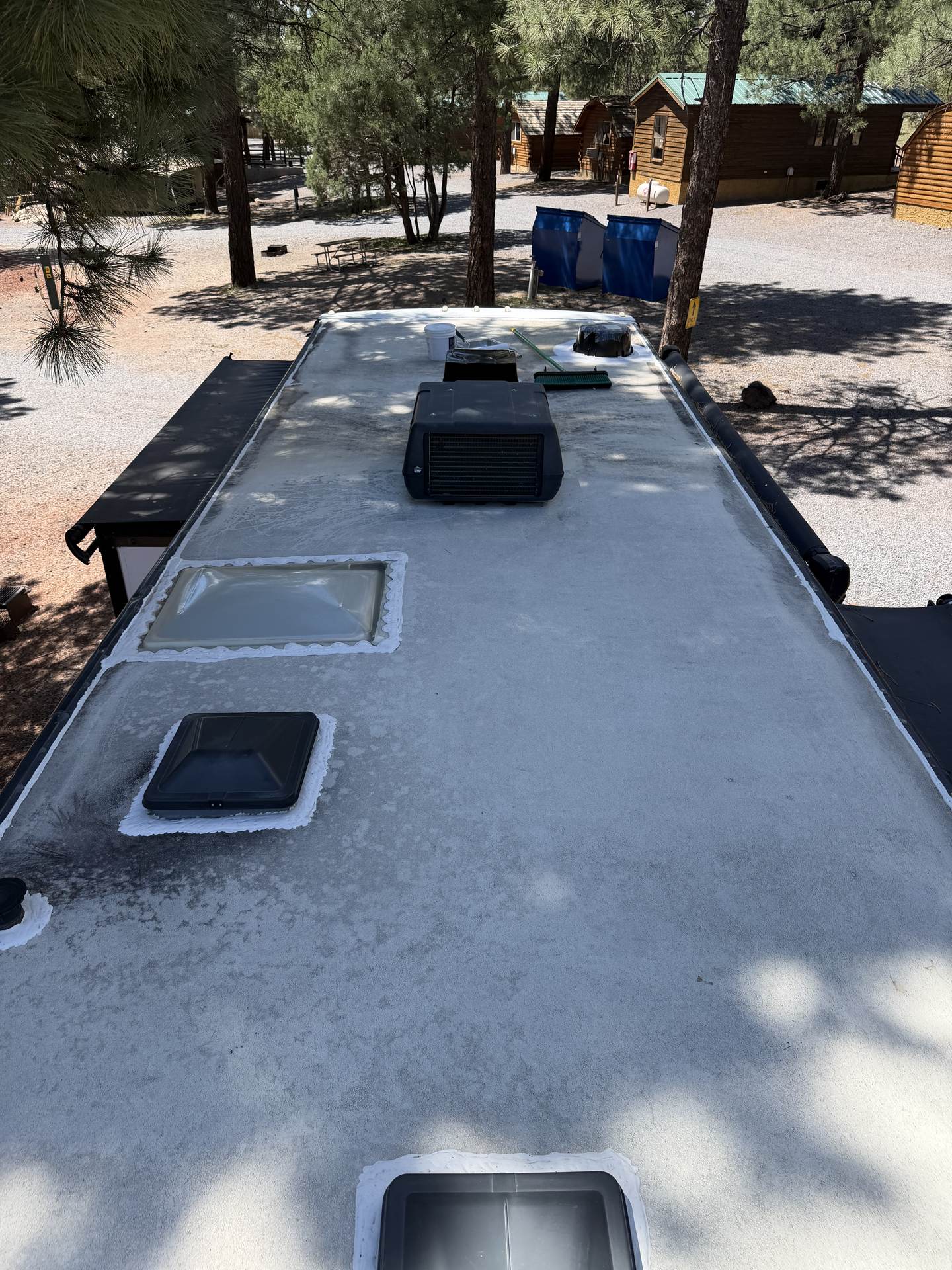
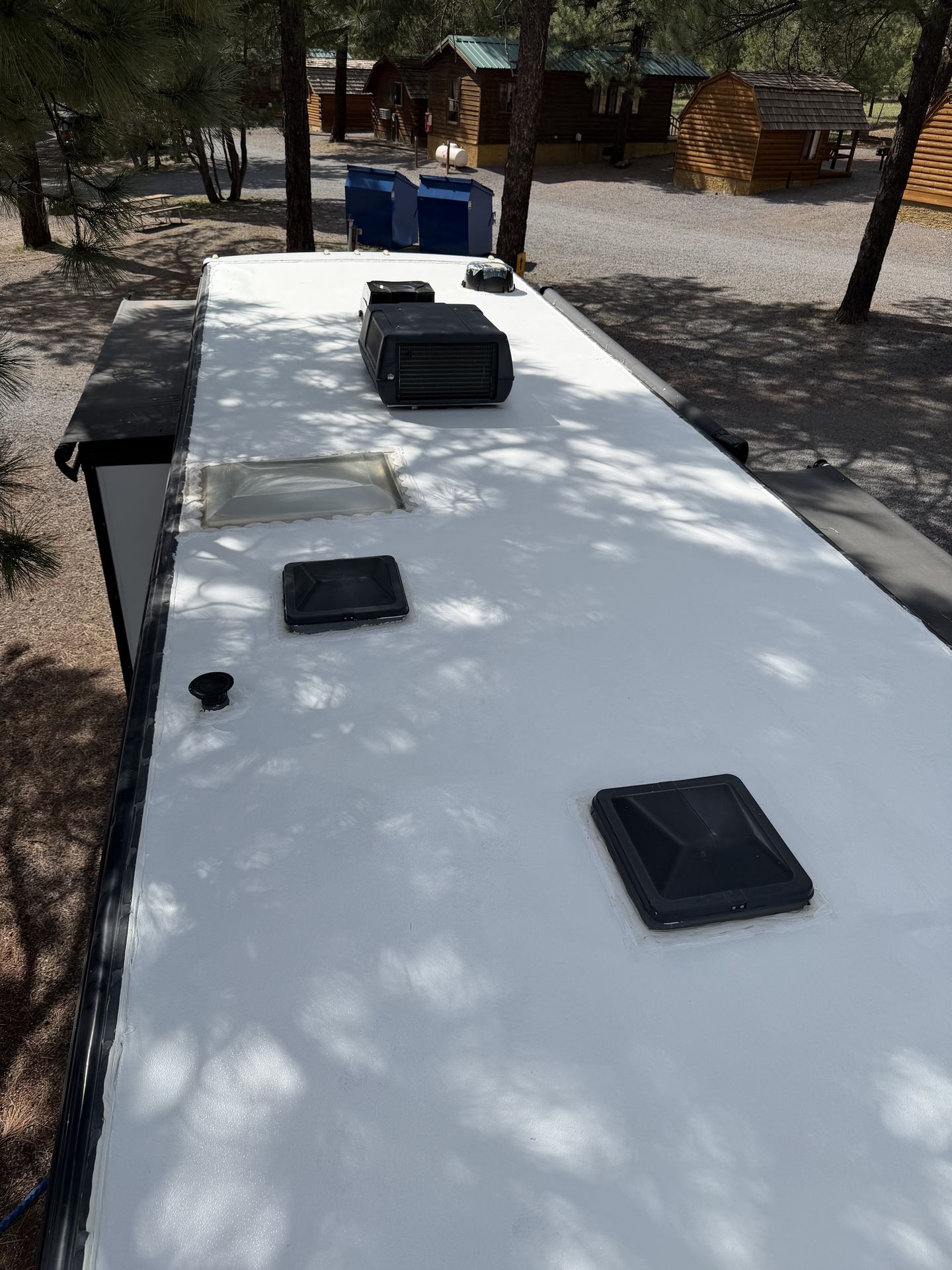
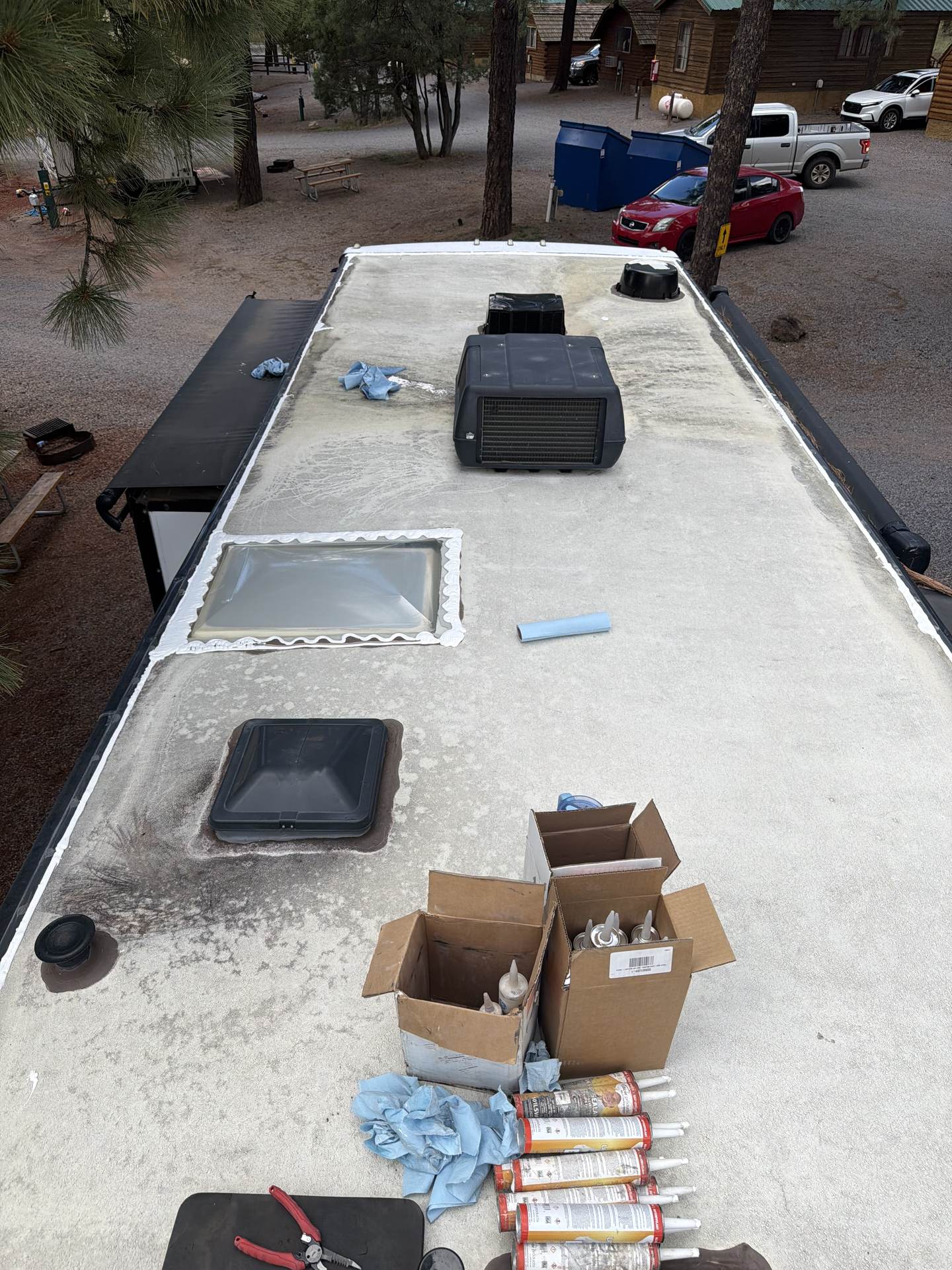
A leak inspection starts on the roof: material condition, every penetration, the front and rear caps, seams and edge trim, and the sealant at each one. Then we work inside from the evidence — moisture readings, panel condition, cabinet interiors, and the framing paths water would follow — until the story on the roof matches the story inside.
Where the source is not obvious, controlled water testing one area at a time isolates it. It is slower than a blanket recoat and worth every minute, because the point of the visit is to stop the water, not to cover the symptom.
Owners are often surprised that a dry state is hard on RV roofs. Intense high-elevation UV, wide daily temperature swings, and constant expansion and contraction break down sealant and roof membrane years faster than a mild climate would. Storage lots in the valley are especially brutal: a rig sits uncovered for months, sealant goes chalky and splits, and the first serious monsoon finds every crack at once.
Then Northern Arizona adds freeze-thaw. Water works into a hairline gap, freezes overnight, expands, and reopens it wider by morning. Between summer monsoons and winter snow on a Flagstaff roof, the case for inspecting sealant twice a year here is much stronger than it is at sea level.
Repairs range from removing and properly rebedding a vent or window to replacing failed sealant along a full seam, repairing roof membrane damage, or addressing structure where water has already done its work. We use materials compatible with your specific roof type — the wrong sealant on the wrong membrane can fail within a season and take the original surface with it.
Once you are dry, the maintenance is simple and cheap: inspect the roof and all sealant every six months, after hail, and after any branch strike. Ten minutes with a flashlight twice a year is the difference between a small resealing job and a floor replacement.
Scope of work
From our work
How it works
01
Where the water shows, whether it follows rain, and when you last had the roof inspected.
02
Roof, penetrations, interior moisture, and targeted testing until the real entry point is confirmed.
03
Correct materials for your roof, verified results, and a straight assessment of any damage already done.
“Bryon was excellent with communication, letting me know I can come in for service sooner than scheduled. He redid my entire PVC sewage line from tank to valve and saved me money by reusing undamaged parts. I totally recommend High Country RV.”
Before you call
Every six months in Arizona, plus after hail or any impact. UV and freeze-thaw cycles here break sealant down faster than in milder climates.
Related work
If you have found a soft spot, do not wait for the next trip. Water damage is one of the few RV problems that gets measurably more expensive every month it is ignored.
Call 888-794-6755 and we will get a leak inspection scheduled at your site.
Monday–Saturday, 7:00 AM–7:00 PM · 7337 Latigo Rd, Williams, AZ 86046