Electrical
Why Your RV Batteries Die Every Winter, and What to Do Before November
· 5 min read
Dead in the spring, again
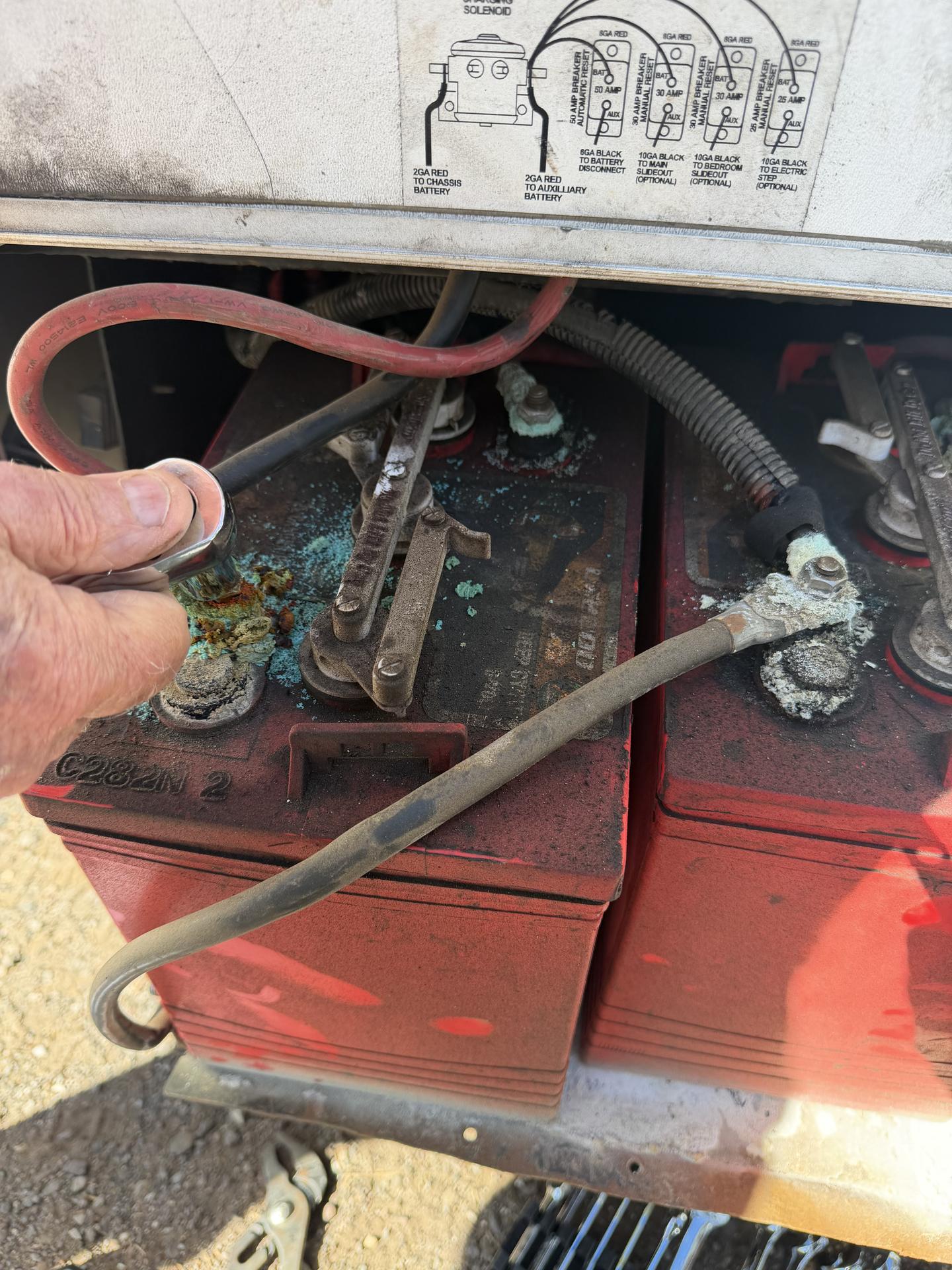
You pull the rig out of storage in April, flip on the lights, and nothing happens. The batteries read 6 volts, they will not take a charge, and they cost $200 to $600 to replace. It happens every year to a lot of owners, and in most cases the cold did not kill those batteries. A small, steady draw did, and the cold finished the job.
How cold steals capacity
Battery chemistry slows down in the cold. A lead acid battery at 32 degrees delivers roughly 80 percent of its rated capacity, and around 0 degrees it is closer to 50 percent. Flagstaff hits single digits most winters, so a battery that ran your furnace fan all night in September may not make it through a night in January.
Cold also raises internal resistance, so voltage sags more under a heavy load like a furnace blower, a slide motor, or the leveling jacks. That is why a battery can read 12.5 volts at rest and still fail to run the furnace.
Parasitic draws that kill a bank in storage
Even with everything switched off, an RV is drawing power. The usual suspects:
- LP and CO detector: around 0.1 amps, all the time.
- Stereo memory and clock.
- Control boards on the fridge, water heater, and furnace.
- Inverter in standby, which can draw 0.5 to 2 amps.
- Leveling system and slide controllers.
- Monitoring panels and USB outlets.
Add it up and a typical rig draws 0.2 to 0.8 amps with everything off. At 0.5 amps, a 100 amp hour battery loses about 12 amp hours a day, and a lead acid battery that can safely use half its capacity is flat in four days. Left that way for a winter, it sulfates and does not come back.
Flooded, AGM, and lithium in freezing temps
Flooded lead acid
The cheapest and most common. A fully charged flooded battery freezes around minus 70 degrees. A discharged one can freeze around 20 degrees, cracking the case. Keep the water above the plates with distilled water and keep it charged.
AGM
Sealed, no watering, and lower self discharge, about 1 to 3 percent a month. AGM handles cold better than flooded but has the same freeze risk when discharged. It also needs the right charge profile, so check that your converter or maintainer has an AGM setting.
Lithium (LiFePO4)
Lighter, deeper usable capacity, and very low self discharge. Lithium can discharge in the cold, but you should never charge it below 32 degrees. Charging lithium when it is frozen causes lithium plating inside the cells, which permanently reduces capacity and can damage the battery. Many lithium batteries now have built-in heaters or a battery management system that blocks charging in the cold. If yours does not, do not leave a charger or solar connected in a freezing storage lot.
“The battery did not die from the cold. It died from sitting at half charge in the cold.”
Storage voltage, maintainers, and solar
For lead acid and AGM, store at full charge, 12.6 to 12.8 volts at rest, and do not let it fall below 12.4. For lithium, most manufacturers recommend storing at 50 to 70 percent state of charge with the battery disconnected.
If your rig sits in a Flagstaff storage lot without shore power, you have three good options:
- Pull the batteries and store them in a garage on a smart maintainer. Best for lead acid.
- Use a true battery disconnect that cuts every load, and check voltage once a month.
- Add a small solar panel, 25 to 100 watts, with a proper charge controller set to your battery type. Flagstaff gets plenty of winter sun, but snow can cover the panel for days, so pair it with a disconnect.
Do not use a cheap trickle charger without a float mode. It will cook a lead acid battery over a few months.
Before November: a storage checklist
- Charge every battery to full on shore power or a smart charger, and let it rest for a few hours before checking voltage.
- Clean the terminals with a baking soda and water mix, rinse, dry, and coat them with a terminal protector.
- Top off flooded batteries with distilled water after charging, not before.
- Turn off the inverter, the stereo, and anything with a standby light.
- Flip the battery disconnect, then put a meter on the negative cable to confirm the draw is truly zero.
- Decide on your plan: pull the batteries, leave them disconnected and check monthly, or install solar with a proper controller.
- If you have lithium with no heater, disconnect any solar or charger in the storage lot so it cannot charge below freezing.
- Write the date and resting voltage on a piece of tape on the battery box, so the next check has something to compare against.
Check stored batteries once a month through the winter. If a lead acid battery is below 12.4 volts, recharge it before it drops further. A battery that loses more than a few tenths of a volt in a month with the disconnect off has a draw you have not found yet, or it is failing internally.
When to call us
Owners can charge batteries, clean terminals, top off water, and pull batteries for storage. Call us if your batteries die every winter even with a disconnect, if you want a true disconnect switch added, if you are upgrading to lithium and need the converter and alternator charging set up correctly, or if you want solar installed. Battery, converter, and draw testing is part of our RV electrical service, and solar and disconnect installs fall under RV accessories. We cover storage lots around Flagstaff and Bellemont.
Common questions
Can I charge lithium RV batteries in freezing weather?
Not below 32 degrees unless the battery has a built-in heater or a management system that blocks cold charging. Charging frozen lithium permanently damages the cells.
What voltage should I store my RV battery at?
Lead acid and AGM at full charge, 12.6 to 12.8 volts, never below 12.4. Lithium at 50 to 70 percent, disconnected.
Will a solar panel keep my RV battery charged in winter storage?
A 25 to 100 watt panel with a proper charge controller usually will in Flagstaff, but snow can cover it, so pair it with a battery disconnect.
Keep reading
Pre-Trip ·
Heading Down to the Valley for the Winter? The Pre-Trip Check That Saves the Trip
The run down I-17 drops 6,000 feet in about 140 miles. Here is what to check before you hitch up so the trip to the East Valley stays boring.
Read article: Heading Down to the Valley for the Winter? The Pre-Trip Check That Saves the Trip
Heating ·
RV Furnace Blowing Cold Air or Not Lighting? Here's What Actually Fails
Your furnace runs in a fixed order, and it stops at the part that failed. Learn the sequence and you can tell a dead battery from a bad igniter in five minutes.
Read article: RV Furnace Blowing Cold Air or Not Lighting? Here's What Actually Fails
Seasonal Prep ·
Winterizing an RV in Flagstaff: Why Arizona Freezes Catch Owners Off Guard
Flagstaff sits at 7,000 feet and sees its first hard freeze weeks before most owners expect it. Here is how to winterize on time and what a missed freeze costs.
Read article: Winterizing an RV in Flagstaff: Why Arizona Freezes Catch Owners Off Guard