Heating
RV Furnace Blowing Cold Air or Not Lighting? Here's What Actually Fails
· 5 min read
The furnace runs, but the air is cold
It is 2 a.m. at a campsite outside Flagstaff, it is 24 degrees outside, and the furnace has been blowing for ten minutes without putting out any heat. Or it clicks, the fan spins up, and then everything shuts off. That is the most common heating call we get from October through March, and the good news is that an RV furnace tells you a lot about what is wrong if you know the order it works in.
The sequence of operation, step by step
Suburban and Atwood (now Dometic) ducted furnaces, the two you will find in most rigs, work in the same order. Watch and listen as it starts, and note where it stops.
- Thermostat call. The thermostat closes a circuit and sends 12 volts to the furnace. If nothing at all happens, not even a click, the problem is the thermostat, its wiring, a fuse, or the battery.
- Blower spins up. The blower motor runs first to purge the combustion chamber. If you hear a click but the fan does not spin, or spins slowly, suspect low voltage or a failing motor.
- Sail switch closes. Airflow from the blower pushes a small paddle that closes a switch and tells the board there is enough air. A weak blower, a blocked return, or lint on the paddle keeps it open.
- Gas valve opens. About 15 to 30 seconds after the blower starts, the board opens the gas valve. You will hear a soft click.
- Igniter sparks. Older furnaces use a separate igniter; newer ones spark from the board. You hear rapid ticking and then a whoosh as the burner lights.
- Flame is proven. A flame sensor confirms combustion. If the board does not see flame within about 7 seconds, it shuts the gas and tries again, usually three times before locking out.
- Limit switch stays closed. A high limit switch cuts the burner if the furnace overheats. Restricted ducts or a slow blower trip it, and the furnace cycles on and off while blowing cold.
If your furnace blows cold air and never ticks, it usually stopped at step 3 or 4. If it ticks and never lights, it is gas supply or the burner. If it lights and shuts off after a few minutes, look at the limit switch and airflow.
Dead or sagging 12 volt supply
This is the number one cause we find, and it is the easiest to check. A furnace blower motor draws 3 to 7 amps. On a battery sitting at 11.8 volts after a cold night, the blower spins slowly, the sail switch never closes, and the board never opens the gas valve. You get noise and no heat.
Check battery voltage at rest with a meter. A healthy lead acid battery reads 12.6 volts or more. Below 12.2 the furnace will struggle, and below 12.0 many boards will not light at all. Cold makes it worse; a lead acid battery at 20 degrees delivers noticeably less capacity than it does at 70. Also check for corroded terminals and a loose ground, which drop voltage under load even when the battery reads fine.
Low propane pressure in the cold
Propane vaporizes slower as it gets colder. A 20 or 30 pound cylinder that is a quarter full on a 15 degree morning may not produce enough vapor to keep a 30,000 BTU furnace lit, especially if the stove or water heater is also running. Frost on the outside of the tank is a clue that it is struggling.
Your regulator should deliver about 11 inches of water column at the appliances. A failing regulator, a kinked pigtail, or a tank valve that is partly closed can all drop pressure. A simple test: if the stove burner flame is tall and blue, gas supply is probably fine. If it is small, lazy, or yellow, look at the tank level and regulator before blaming the furnace.
Pressure testing requires a manometer and a careful approach. Owners can check tank level and that the valve is fully open. Leave regulator testing and gas line work to a tech.
Dirty burner tubes and spider nests
Mud daubers and spiders love the burner tube and exhaust on RV furnaces and water heaters. Over a summer of sitting, they build a nest that blocks gas flow or airflow, and the furnace either will not light or lights with a weak, yellow, sooty flame. Pine needles and dust from northern Arizona campgrounds add to it.
From the outside you can look at the exhaust and intake vent and clear obvious debris, and you can add a screen designed for your furnace model. Pulling the furnace to clean the burner and combustion chamber is a job for a tech, because reassembly involves gaskets and a sealed combustion path that keeps exhaust out of the living space.
“A furnace that lights with a yellow, lazy flame is not a furnace that is working. It is a furnace telling you it needs attention.”
What is safe for an owner to check
Safe for owners
- Battery voltage at rest and while the blower is running.
- The furnace fuse at the 12 volt distribution panel.
- Thermostat batteries, settings, and that it is set to furnace, not heat pump.
- Propane tank level and that the tank valve is fully open.
- Return air grille and floor ducts clear of rugs, boxes, and pet beds.
- Exterior vent clear of nests, snow, and debris.
Leave these to a tech
- Opening the combustion chamber, burner, or gas valve.
- Testing or adjusting propane regulator pressure.
- Replacing a sail switch, limit switch, or control board.
- Anything involving a propane smell.
When to call us
Do the owner checks above first. They solve a fair share of no-heat calls in five minutes, and they save you a service fee. If voltage and propane are good and the furnace still will not light after three tries, or it cycles on its limit, call. Typical repairs run $150 to $450 for a sail switch, igniter, or limit switch, and $250 to $500 for a control board, installed.
We repair heating systems through our RV furnace service and handle regulator and gas line work under LP appliance service. If your battery is the weak link, our RV electrical service covers that too. We come to you in Flagstaff, Munds Park, and the rest of the high country.
Common questions
Why does my RV furnace blow cold air?
The blower runs before the burner lights. If the burner never lights, the most common causes are low 12 volt supply, low propane pressure, a sail switch that will not close, or a failed igniter or board.
Can low battery voltage stop my RV furnace?
Yes. Below about 12.0 volts many furnaces will not light, because the blower spins too slowly to close the sail switch.
Is it safe to clean my RV furnace burner myself?
Clearing the outside vent is safe. Opening the combustion chamber or burner should be left to a technician.
Keep reading
Pre-Trip ·
Heading Down to the Valley for the Winter? The Pre-Trip Check That Saves the Trip
The run down I-17 drops 6,000 feet in about 140 miles. Here is what to check before you hitch up so the trip to the East Valley stays boring.
Read article: Heading Down to the Valley for the Winter? The Pre-Trip Check That Saves the Trip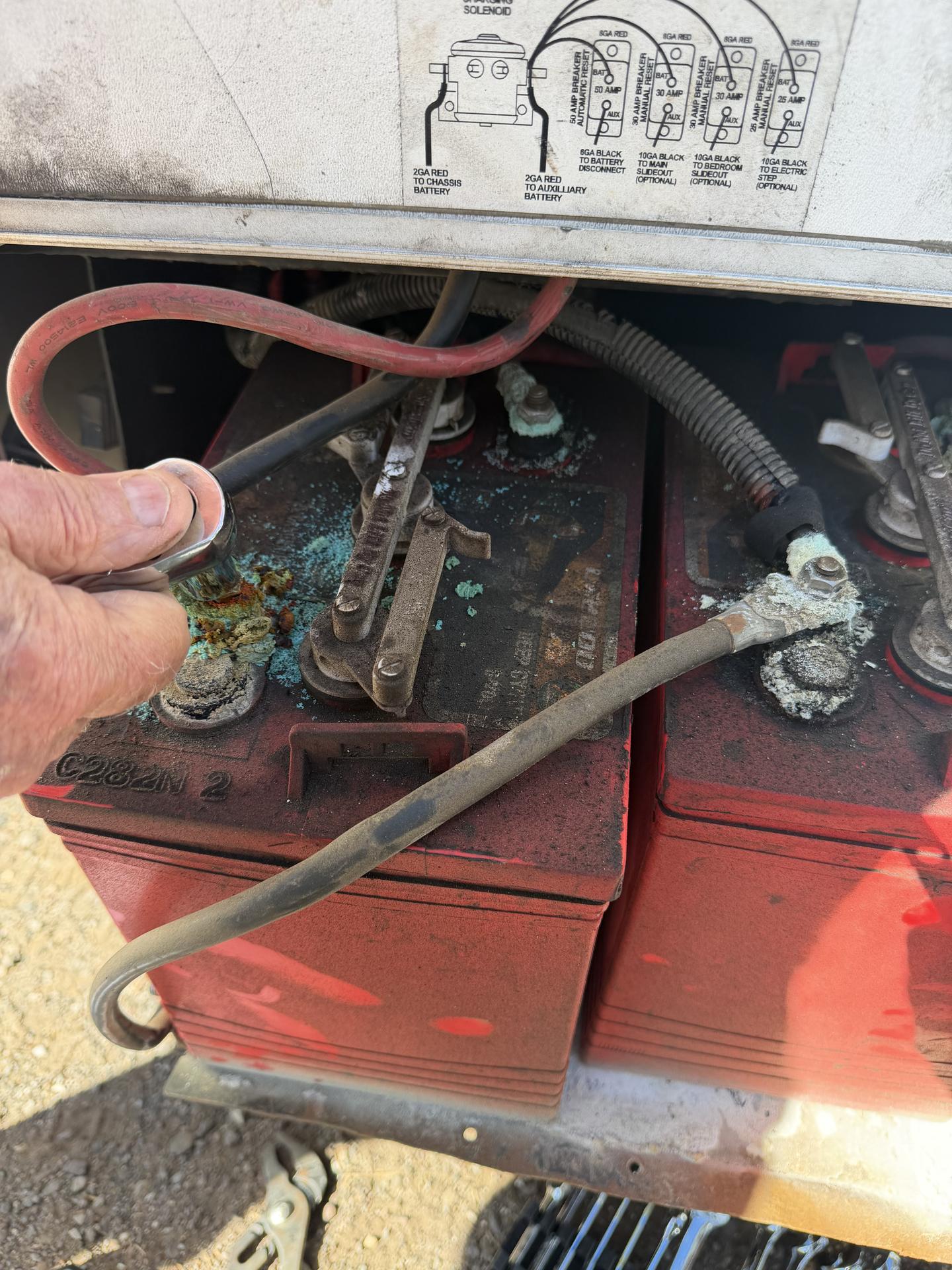
Electrical ·
Why Your RV Batteries Die Every Winter, and What to Do Before November
A battery that sits in a Flagstaff storage lot all winter with a parasitic draw is dead by January. Here is how to keep it alive until spring.
Read article: Why Your RV Batteries Die Every Winter, and What to Do Before November
Seasonal Prep ·
Winterizing an RV in Flagstaff: Why Arizona Freezes Catch Owners Off Guard
Flagstaff sits at 7,000 feet and sees its first hard freeze weeks before most owners expect it. Here is how to winterize on time and what a missed freeze costs.
Read article: Winterizing an RV in Flagstaff: Why Arizona Freezes Catch Owners Off Guard