Pre-Trip
Heading Down to the Valley for the Winter? The Pre-Trip Check That Saves the Trip
· 5 min read
The I-17 descent finds every weak part
Every fall, a lot of northern Arizona owners hitch up and run down to Mesa, Apache Junction, and Gold Canyon for the winter. The drive from Flagstaff to the East Valley is only about 150 miles, but the stretch of I-17 from the top near Munds Park to Camp Verde and then down past Sunset Point drops more than 5,000 feet, much of it on long 6 percent grades. Brakes, bearings, and tires work harder on that run than they do all summer.
Then the rig sits in a resort in the Valley for four or five months, often in 80 degree afternoons, and comes back up in April. Fixing the small things in Flagstaff before you leave is faster and cheaper than chasing them from a resort site in Mesa.
Tires and DOT date codes
RV tires age out long before they wear out. UV at 7,000 feet is brutal on sidewalls, and a rig that sits most of the year develops dry rot and cracks between the tread blocks while the tread still looks new.
- Find the DOT code on the sidewall. The last four digits are the week and year. 2320 means the 23rd week of 2020.
- Most tire makers and RV manufacturers recommend replacing RV tires at 5 to 7 years regardless of tread. On a trailer, ST tires at 5 years old are due.
- Set cold pressure to the sidewall maximum or the load chart value, in the morning before driving. A tire set in Flagstaff at 40 degrees will read higher in Mesa at 85.
- Look for sidewall cracks, bulges, and uneven wear that points to an alignment or axle problem.
- Check the spare too. It is usually the oldest tire on the rig.
Bearings and brakes
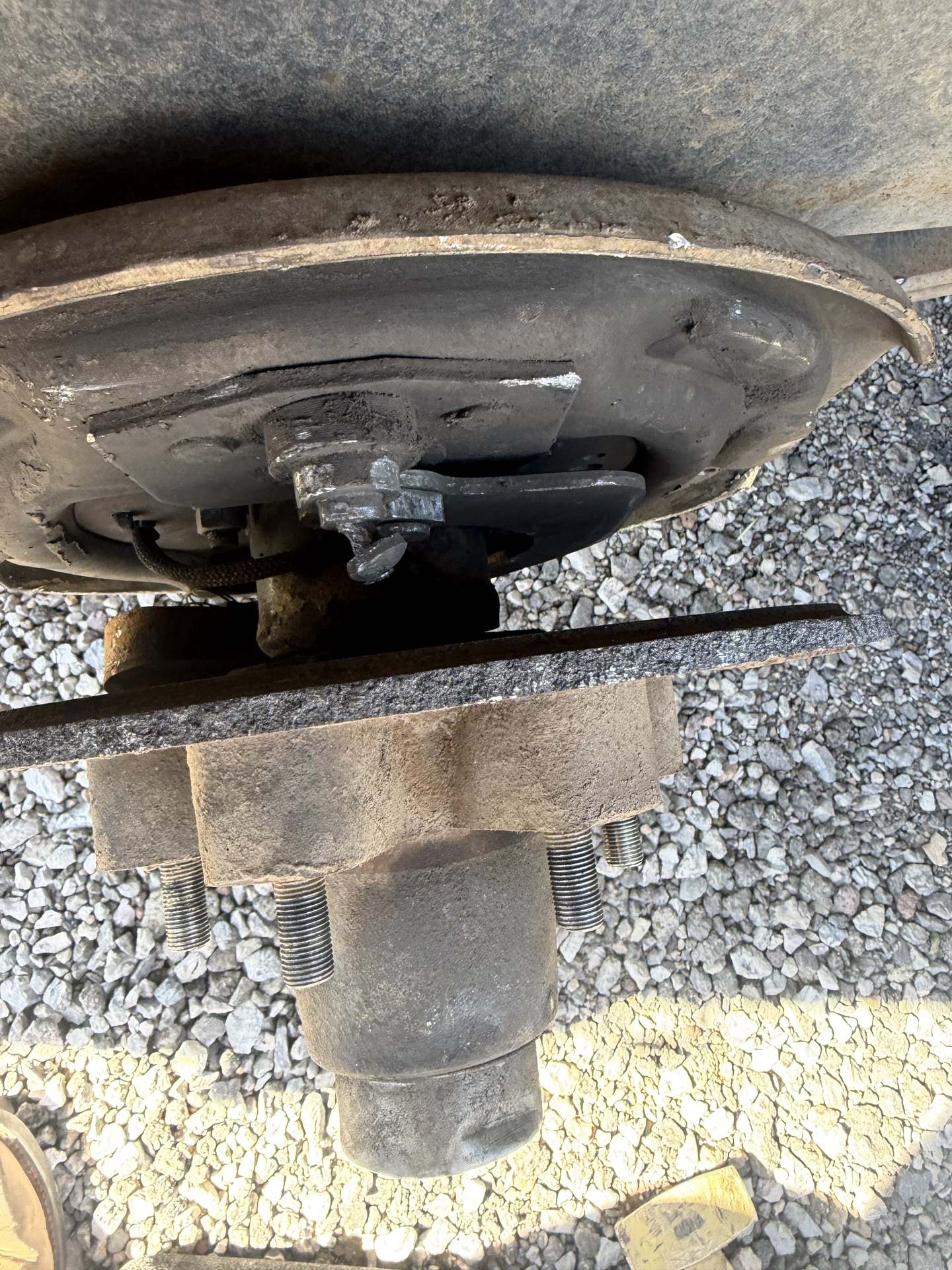
Trailer wheel bearings should be inspected and repacked every 12 months or 12,000 miles. Most rigs that sit all summer have not hit the miles, but the grease still ages and moisture gets in. A bearing that fails on I-17 can take the hub and spindle with it, and that turns a $250 service into a tow and an axle repair.
Before you leave, jack each wheel and spin it by hand. Listen for grinding, and rock the tire top to bottom to feel for play. After the first 20 miles, feel each hub with the back of your hand. They should all be about the same temperature. One noticeably hotter than the others is a warning.
Electric trailer brakes need adjustment as the shoes wear. Set the brake controller gain on a flat road so the trailer brakes firmly without locking. Inspect magnets and shoes when the drums are off for bearings. On the long grade down to Camp Verde, use the tow vehicle's gears and let the trailer brakes help, not do all the work.
Propane, roof, and seals before the move
Propane systems take a beating from road vibration. Before the trip, check the age of your regulator (they are typically good for 10 to 15 years), look at pigtails for cracks, and have a leak test done if it has been more than a year. Cylinders need requalification 12 years after the manufacture date and every 5 years after that.
Walk the roof. Monsoon season just ended and snow was on it last winter. Check sealant around vents, the A/C shroud, the antenna, and the front and rear caps for cracks or gaps. A small crack in Flagstaff turns into a leak during the first winter rain in Mesa, and you may not notice until the ceiling stains.
Check the slide seals and window seals too. Desert heat dries rubber fast, and a dried seal shrinks enough to let dust and water in.
Battery state of charge
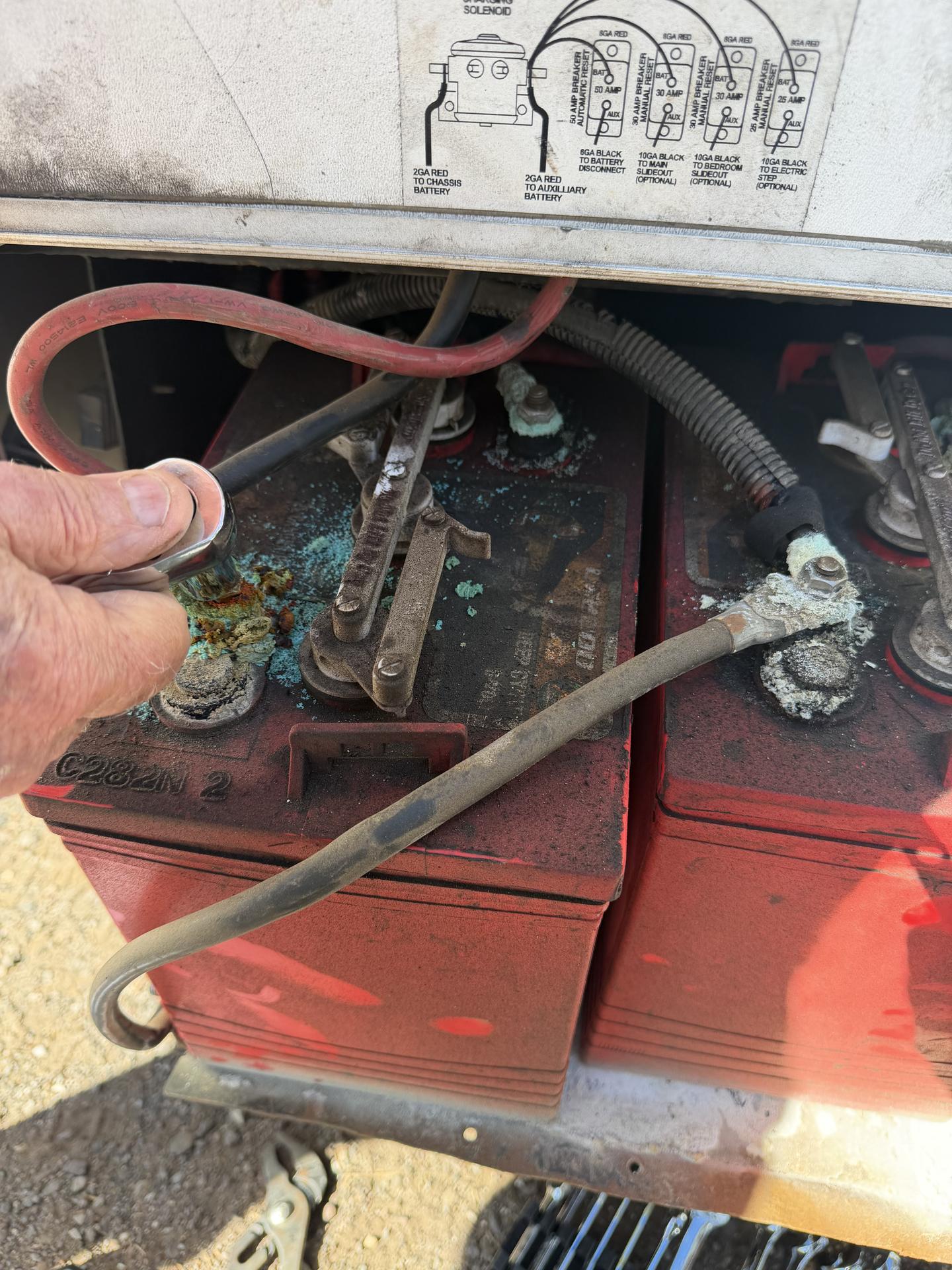
Charge the batteries fully before you leave. Your breakaway switch needs battery power to stop the trailer if it separates from the tow vehicle, and a dead battery means the breakaway does nothing. Clean the terminals and check the water level in flooded batteries.
A lead acid battery at 12.6 volts at rest is full. If yours will not hold above 12.4 overnight with everything off, it is near the end of its life.
“A good pre-trip is the most boring service we do. That is the whole point. You want the drive to be boring too.”
What tends to break on the I-17 descent
We see the same handful of failures from the run between Flagstaff and Phoenix every year. Knowing them ahead of time tells you where to look before you leave and what to watch on the way down.
- Overheated trailer brakes on the grade past Sunset Point, usually from a controller set too high or a tow vehicle left in drive instead of a lower gear.
- Wheel bearings that were dry or loose, which show up as one hot hub at the rest area near Camp Verde.
- Blowouts on old ST tires, especially on the hot asphalt below 3,000 feet in early November afternoons.
- Cabinet latches and the fridge door opening on rough pavement, so tape or bar them before you go.
- Loose propane pigtails and regulator fittings, which loosen with vibration and show up as a smell at the first stop.
- Roof vent lids and the TV antenna left up, which catch wind in the canyon gusts.
Plan the drive for the morning, before the Valley heat builds. Leave room to pull off at the rest areas and at the Cordes Junction exit. Check hubs and tires at each stop. If you are carrying full fresh water, dump it before the trip; 40 gallons is over 330 pounds you do not need on a 6 percent downgrade. Watch the brake controller display as you descend, and if the trailer starts pushing, drop a gear and slow down instead of riding the brakes.
The get-this-done-before-you-hitch-up checklist
- Two weeks out: tire date codes and condition, bearings and brakes inspected, roof walk.
- One week out: propane leak test, regulator and pigtails checked, battery load test.
- Three days out: fill fresh tank only as much as you need for the road, dump and flush tanks, charge batteries.
- Day before: cold tire pressure, lug nut torque, check all lights and breakaway.
- Day of: hitch, safety chains crossed, brake controller test in the lot, check hubs at the first stop.
- Arrival in the Valley: re-torque lug nuts after the first 50 miles, check tire pressure in the heat.
When to call us
Owners can check date codes, set pressure, charge batteries, and walk the roof. Bearings, brake adjustments, propane leak tests, and roof resealing are where a tech earns the fee. We do a full service and safety check on site in Flagstaff, and our winterizing and pre-trip service combines both into one visit. If something comes up after you land, we cover Mesa and the East Valley through the winter.
Common questions
How old is too old for RV tires?
Most manufacturers recommend replacing RV tires at 5 to 7 years regardless of tread depth. Check the last four digits of the DOT code for the week and year.
How often should trailer bearings be serviced?
Every 12 months or 12,000 miles, whichever comes first.
Do you service RVs in both Flagstaff and Mesa?
Yes. We serve northern Arizona through November and Mesa and the East Valley through the winter months.
Keep reading
Electrical ·
Why Your RV Batteries Die Every Winter, and What to Do Before November
A battery that sits in a Flagstaff storage lot all winter with a parasitic draw is dead by January. Here is how to keep it alive until spring.
Read article: Why Your RV Batteries Die Every Winter, and What to Do Before November
Heating ·
RV Furnace Blowing Cold Air or Not Lighting? Here's What Actually Fails
Your furnace runs in a fixed order, and it stops at the part that failed. Learn the sequence and you can tell a dead battery from a bad igniter in five minutes.
Read article: RV Furnace Blowing Cold Air or Not Lighting? Here's What Actually Fails
Seasonal Prep ·
Winterizing an RV in Flagstaff: Why Arizona Freezes Catch Owners Off Guard
Flagstaff sits at 7,000 feet and sees its first hard freeze weeks before most owners expect it. Here is how to winterize on time and what a missed freeze costs.
Read article: Winterizing an RV in Flagstaff: Why Arizona Freezes Catch Owners Off Guard